Agile Methodology
Agile Testing
In this type of environment, quality assurance (QA) adheres to agile practices; the testing requirements are dynamic and constantly changing to meet the needs of the customer; the dev team sends a small piece of code for testing to the QA team, and the testing is done in parallel with the development activity. Testing requirements are dynamic and constantly changing to meet the needs of the customer, so QAs adhere to agile practices. The QA team receives a small piece of code for testing from the dev team, and it is carried out in parallel with the development activity. The QA team receives a small piece of code from the development team for testing, which is done concurrently with the development activity.
Scrum
Basically, Scrum is grouping some people. And who are involved in this? There is main 5 guys are there as below:
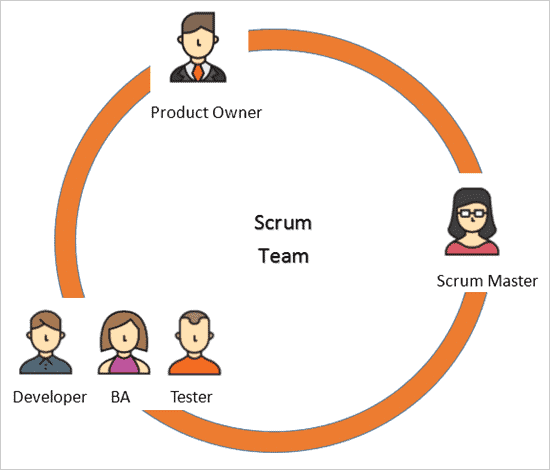
Scrum Team
- Scrum Master
- Product Owner
- BA
- Dev Team
- QA Team
Principle of Agile Software Testing
- Testing moves the project forward: The only way to guarantee ongoing advancement is through continuous testing.
- Testing is not a phase : In order to make sure that the features added during a particular iteration are completed, the agile team tests in tandem with the development team.
- Everyone tests : Agile testing involves testing the application by the whole team, which includes analysts, developers, and testers. Even the customer conducts User Acceptance Testing following each iteration.
- Keep the Code Clean : As soon as the defects are brought up during the same iteration, they are fixed.
- Lightweight / Less documentation
- Test Driven Development Approach (TDD): The requirements are written down with test cases included. Tests can therefore be used to guide development. This methodology is known as Acceptance Test Driven Development (ATDD) and Test Driven Development (TDD).
What is the difference between Agile and Scrum?
Scrum is a model, and agile is a practice. Alternatively, you could say that Scrum is a team. Therefore, these scrum practitioners use Agile, which adheres to some of the principles of the Agile software development methodology. And those guidelines are as follows:
- Continuous testing is the only way to ensure the continuous progress.
- Testing is not a Separate phase.
- Everyone tests in Agile environment.
- Very Less documentation.
- And the most important thing, they follow the TDD approach. Hence, Development can be driven by testing.
What are the different roles in Scrum?
The three scrum roles i.e., Scrum Master, Product Owner and Team should be explained with the details of few primary responsibilities of each role.
- Product owner: A product owner is the project’s actual stakeholder. In front of the team, he represents the project requirements. It is his duty to have a clear idea of what needs to be built and to share that idea with the team. An agile scrum software development project begins with him.
- Scrum team: A Scrum team is made up of all the people who work together to accomplish a specific project. Scrum team 6 comprises 4 QA and 6 developers, with about 10 members total.
- Scrum master: The scrum master is the team’s coach and leader, ensuring that the team is carrying out assigned tasks correctly. In order for the team to successfully complete the sprint, he is also in charge of boosting productivity and efficiency.
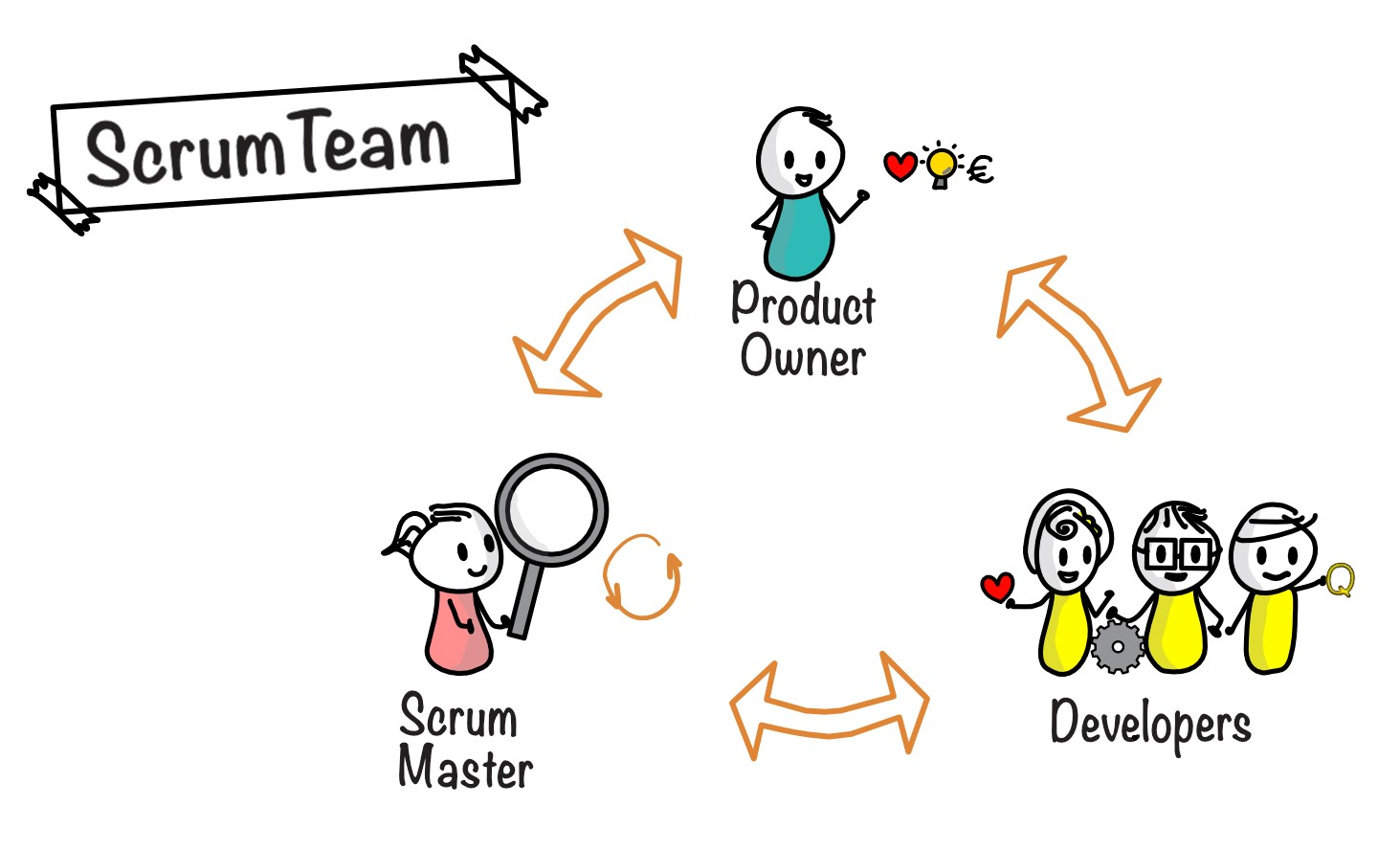
Scrum Team
What do you know about “Planning Poker” technique?
Planning Poker
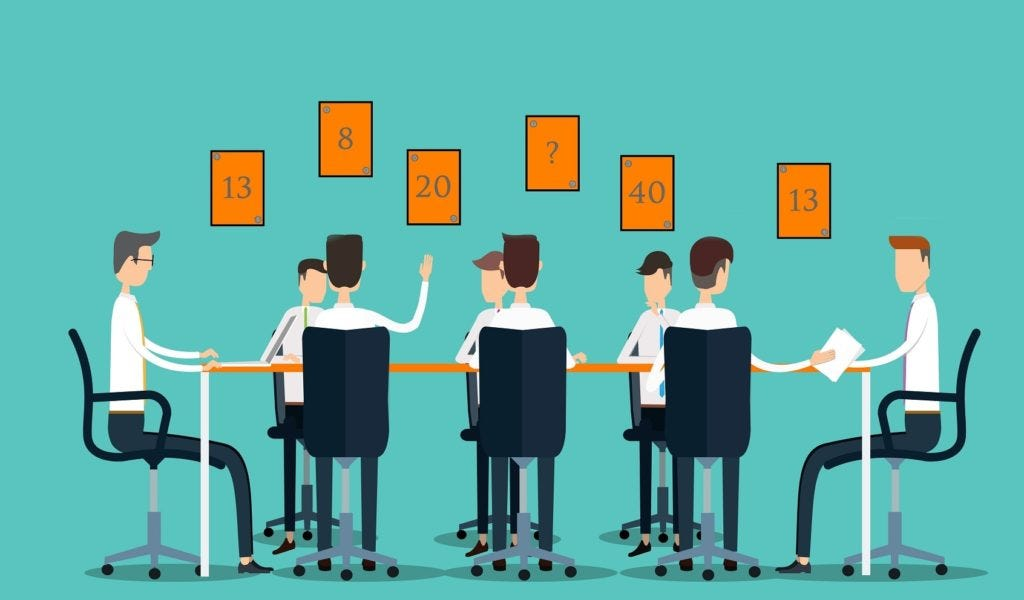
Scrum Poker, another name for planning poker, is an agile card-based technique used for estimation and planning. The product owner reads the agile user story before beginning a planning poker session. The procedures used in the poker planning method are as follows:
- A deck of poker cards bearing numbers like 0, 1, 2, 3, 5, and so forth is given to each estimator by the team to indicate story points, ideal days, or other metrics.
- After conferring with the product owner, each estimator privately chooses a card based on their separate estimates.
- An estimate is made if all estimators select the same cards with the same value. If not, the estimator talks about the estimates’ high and low values.
- However, each estimator secretly chooses and discloses a card. Once a general agreement is reached, this poker planning process is repeated.
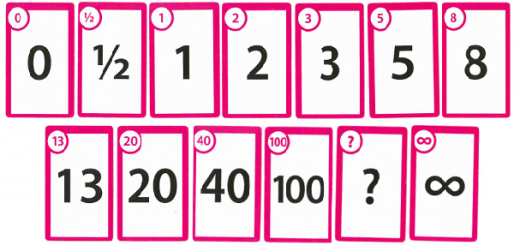
User Story numbers
Agile Appendix
- Sprint: 14 days or 2 weeks or 10 working days.
We get business requirements in the form of User Story. - Epic: Collection of numerous features or user stories.
- Feature: Group of multiple user stories.
- User story: The user story is provided by the business analyst or BA and the actual business requirements. Additionally, we talk about clarifying the requirements or user story with BA. in order for us to begin the process of developing test cases.
- Daily stand up: It is daily standup meeting for 15 minutes happens on daily basis.
- Product backlog: All of the epics and user stories that will be developed in the next sprints are listed as pending items.
- Sprint backlog: Essentially, we transfer the user stories from the product backlog to the current sprint backlog, which consists of the action items for the current sprint.
- Agile ceremonies: There are 4 agile ceremonies below:
- Sprint Planning: development team, scrum master, product owner.→ Involve entire team to discuss that how much work the team can complete from the product backlog. That body of work then becomes the sprint backlog.
- Daily Stand-Up: development team, scrum master, product owner → Stand-up is designed to quickly inform everyone of what’s going on across the team.
- What did I complete yesterday?
- What will I work on today?
- Am I blocked by anything?
- Sprint Review: development team, scrum master, product owner→ Iteration review is a time to showcase the work of the team. They can be in a casual format like “demo Fridays”
- Sprint Retrospective: In this meeting, we primarily address three issues: What went wrong during the sprint life cycle? What was successful throughout the sprint life cycle.What should we improve upon for the next sprints?
- Capacity and Velocity: The latter is determined by actual points completed, usually as the average of all previous sprints. The team uses velocity to plan how many items from the product backlog to bring into the next sprint. The team’s capacity is the amount of time they have available for the sprint.
- Pair programming : is an agile software development methodology wherein two programmers collaborate at a single workstation. One writes the code, and the other reviews it. Alternatively, they could swap roles in accordance.
- Impediments: An Impediment is anything that keeps the Team from getting work done and that slows Velocity. A sick team member, a missing resource, a lack of management support, or even a chilly team room can all be obstacles. Anything that prevents the team from completing its tasks is an impediment. “Anything that can hinder the advancement of your project or user story or keep it from being completed is an impediment.”
- Burn up and Burn Down chart: A burn-up chart displays the total scope of the project as well as the amount of work that has been completed, while a burn-down chart displays the amount of work that needs to be done on the project (the remaining effort).
- Build breaker: A “Build Breaker” is an unintentional error made by a software developer that can occasionally cause the build process to stop, unacceptable warnings to appear, and/or failures in automated test environments.
- Grooming in Agile: For agile product development teams, backlog grooming, also known as backlog refinement or story time is a regular occurrence. A backlog grooming session’s main goal is to make sure the product backlog’s user stories for the upcoming few sprints are ready for sprint planning.
- Zero sprint : The preparatory phase of the initial Agile sprint is known as the Zero Sprint. Prior to the project commencing, there are certain tasks that must be completed. These tasks are referred to as the “Zero sprint”; some examples include preparing backlogs and creating development environments.
- Spike : A story that can be read in between sprints is called a spike. Spikes are frequently utilized for tasks like research, design, prototyping, and exploration that are connected to technical or design-related concerns. Spikes can be classified as either functional or technical.


Comments
Post a Comment